
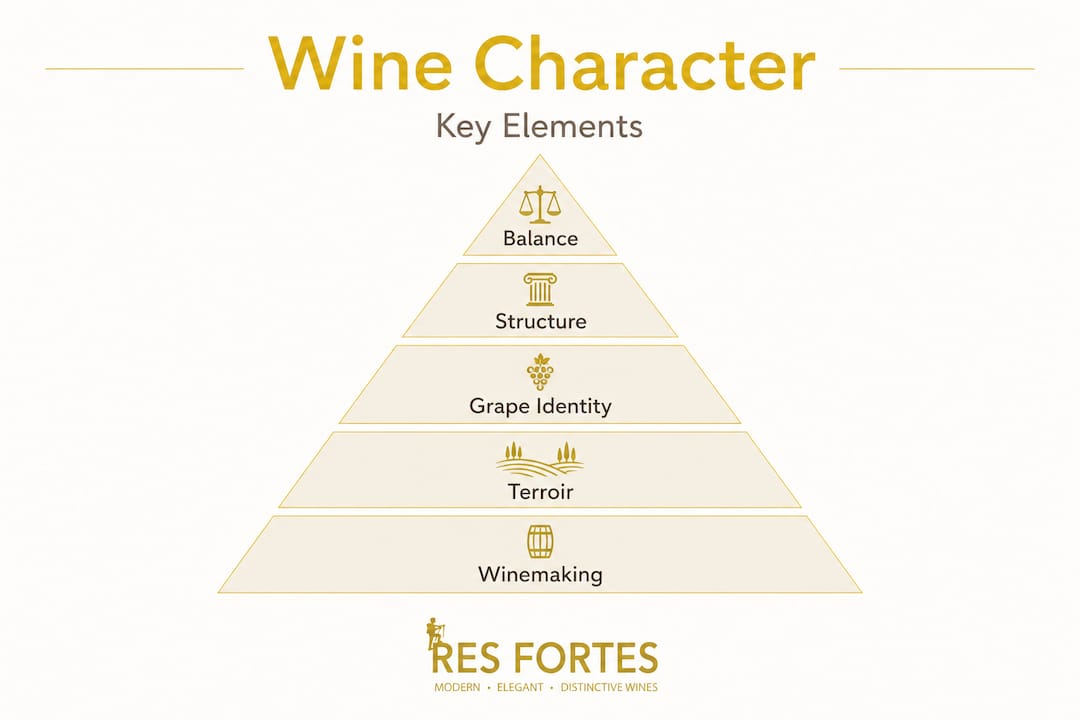
Wine character is one of those terms that sounds like it belongs in a tasting note written for someone else. Too poetic to be practical, too vague to be useful. But strip away the mystique, and character turns out to be one of the most tangible, evidence-backed concepts in the world of wine: a wine’s distinguishable overall personality, shaped by balance, structure, varietal integrity, and a clear sense of place. Once you understand what character actually means, every bottle becomes more readable, more interesting, and far more rewarding to drink.
Key Takeaways
| Point | Details |
|---|---|
| Wine character basics | Wine character blends balance, structure, grape identity, and sense of place for a true personality. |
| Terroir’s real impact | Soil, site, and climate shape grape chemistry—ultimately constraining the winemaker’s options. |
| Role of winemaking | Winemaking and ageing affect aromas and texture, creating greater variety in character. |
| How to assess | Using systematic tasting steps helps anyone identify and appreciate a wine’s unique character. |
| Trust your palate | Learning character means discovering what you enjoy and trusting your senses, not just the label. |
Defining wine character: more than just flavour
Ask most people what makes a wine good, and they’ll talk about flavour. Fruity, dry, smooth. These are real observations, but they only scratch the surface. Wine character is something more layered. It’s the overall impression a wine leaves, from the moment you lift the glass to the lingering finish minutes after the last sip.
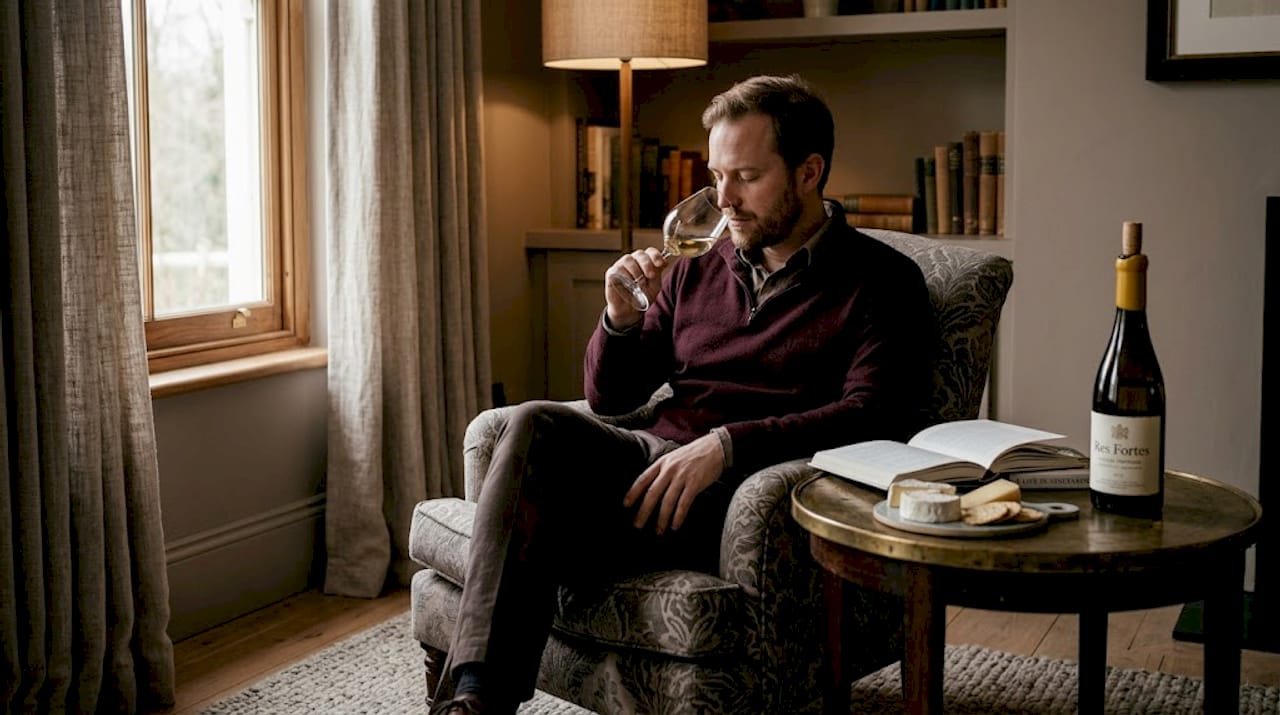
As wine writer Allen Balik puts it, wine character is the wine’s distinguishable overall personality, driven by how well its balance and structure come together, alongside an identifiable sense of varietal integrity and place. That’s a precise, useful definition. It tells you that character isn’t just flavour. It’s the sum of how all the wine’s qualities fit together and whether they feel honest and coherent.
Think about what that means in practice. A wine might be fruity and pleasant but feel flabby and unfocused. Another might be austere at first but reveal layers of complexity over the course of a meal. The second wine has stronger character, not because it tastes better in isolation, but because its components are in conversation with each other.
The core building blocks of wine character include:
- Aroma: The range of scents, from primary fruit notes to more complex earthy or floral tones
- Taste: Sweetness, acidity, bitterness, and savouriness on the palate
- Mouthfeel: The texture and body, including how tannins feel and how alcohol sits
- Finish: How long and how clearly the wine’s qualities linger after swallowing
- Sense of place: Whether the wine communicates something about where it came from
Understanding single vineyard character is particularly revealing here. When a wine comes from one specific plot of land and reflects that site honestly, its character tends to be more defined, more individual, and ultimately more telling.
“Wine character is not a marketing invention. It’s the point where biology, geography, and craft intersect in the bottle.”
Wines that earn notable wine accolades are frequently cited for their character above all else. Judges don’t reward pleasantness. They reward wines that have something genuine and coherent to say.
How experts assess wine character
Professionals don’t rely on gut instinct alone. They use structured frameworks to bring consistency and clarity to what can otherwise be a very subjective experience. The good news is that the same approach scales down beautifully for anyone willing to slow down and pay attention.
Sensory evaluation of wine maps character descriptors across measurable domains: appearance, nose and aroma, palate and taste, and mouthfeel and texture. These aren’t arbitrary categories. Each one captures a different dimension of what the wine is expressing, and structured tasting protocols organise all of them into a repeatable process.
Here’s a simplified tasting sequence you can apply right now:
- Look at the wine. Note the colour depth, clarity, and any signs of oxidation or age (a browning rim on a red, for example).
- Smell before you taste. Swirl gently to release volatile compounds, then nose the wine without rushing. Note primary fruit aromas first, then look for anything more complex beneath.
- Taste in stages. Let the wine move across your palate. Notice sweetness at the front, acidity on the sides, and bitterness or tannins at the back.
- Assess mouthfeel. Is the body light, medium, or full? Are the tannins silky or grippy?
- Evaluate the finish. A short finish fades in seconds. A great finish can persist for a minute or more, still revealing nuance.
| Sensory domain | What to notice | Why it matters for character |
|---|---|---|
| Appearance | Colour, clarity, viscosity | Signals age, grape variety, and winemaking style |
| Aroma | Primary, secondary, tertiary | Reveals origin, fermentation, and development |
| Palate | Sweetness, acidity, bitterness | Shows balance and structural integrity |
| Mouthfeel | Body, tannin, texture | Communicates weight and drinkability |
| Finish | Length, complexity | The final signature of a wine’s true character |
Pro Tip: Next time you open a bottle, spend 60 seconds just nosing the wine before you taste it. The aromas you detect at this stage often reveal more about a wine’s character than the taste itself, and you’ll be surprised how much more you notice when the palate isn’t involved yet.
Systems like WSET (Wine and Spirit Education Trust) are built around exactly this kind of structured assessment. They don’t make tasting robotic. They give you a reliable vocabulary for describing aroma and balance in blends and understanding why one wine feels harmonious while another feels disjointed.
The influence of terroir: place as personality
Few concepts in wine generate as much debate as terroir. At its core, terroir refers to the complete natural environment in which a wine is produced: soil type, geology, drainage, altitude, aspect, microclimate. It’s the idea that place leaves a fingerprint on the wine.
But the relationship isn’t magic. Terroir influences vine growth and grape chemistry, which then constrains what the winemaker can express in the finished wine. The causal chain runs from geology through the vine, into the grape, and finally into the winemaker’s hands. Every step in that process is shaped by what came before it.
Consider two Grenache vines grown just a few kilometres apart. One sits on well-drained schist at altitude, receiving intense sun but cooling mountain air at night. The other grows on heavier clay soil in a warmer valley. The same variety, the same winemaker, the same vintage. The wines will taste and feel markedly different, because the site has shaped everything from berry size to sugar accumulation to acid retention.
| Terroir factor | How it affects the vine | Impact on character |
|---|---|---|
| Soil type (schist, granite, clay) | Drainage, mineral availability, heat retention | Fruit weight, texture, aromatic complexity |
| Altitude | Diurnal temperature variation | Preserved acidity, freshness, aromatic lift |
| Aspect and sun exposure | Ripening rate and sugar accumulation | Alcohol level, fruit concentration, body |
| Microclimate | Wind, humidity, frost risk | Crop consistency, disease pressure, vintage variation |
One persistent myth is that the minerals you taste in wine come directly from the soil. You’ll often hear people describe a wine as “flinty” or “chalky” and imply they’re literally tasting the geology. In reality, vineyard site impact works indirectly. The soil affects how the vine grows and what chemistry develops in the grape. The sensation of minerality is a real experience, but it’s a product of acidity, volatile compounds, and phenolic structure, not minerals migrating from rock into wine.
Pro Tip: If you want to feel terroir rather than just read about it, try tasting two wines made from the same grape variety but from very different sites. The contrast will make the concept tangible immediately.
Winemaking decisions and ageing: shaping character in the cellar
Terroir sets the limits. The winemaker decides what to do within them. And those decisions have enormous consequences for the character that ends up in your glass.
Winemaking choices and ageing generate secondary and tertiary aromas through fermentation and oxidation, which can overlay or entirely reshape the fruit-driven character the grapes originally brought in. That’s a significant idea. It means the same fruit could produce radically different wines depending on the hands it passes through.
The three layers of aromas and flavours in wine are:
- Primary: Directly from the grape, including fresh fruit, floral, and herbaceous notes
- Secondary: Produced during fermentation, including yoghurt-like lactic notes from malolactic conversion, bread and pastry from yeast, and richer fruit tones
- Tertiary: Developed during ageing, including vanilla, toast, and spice from oak; dried fruit and leather from bottle age; and earthy, mineral tones from oxidative development
Consider the contrasting roles of oak and stainless steel. A Chardonnay fermented and aged entirely in steel will be crisp, clean, and focused on fruit. The same Chardonnay aged in new French oak will carry vanilla, butter, and a rounder, creamier texture. Neither is objectively better. But they represent genuinely different expressions of character.
Wine blending adds another dimension. A skilled blender can use one variety to add lift and freshness, another to provide body and colour, and a third to lengthen the finish. The character of the final wine may bear little resemblance to any single component on its own.
“Great winemaking doesn’t manufacture character. It protects the character that the vineyard already contains and knows how to get out of the way.”
Two Grenache-based wines from the Côtes du Roussillon could represent almost opposite ends of the character spectrum. One might be whole-bunch fermented in amphora, producing an earthy, wild, red-fruited wine with grippy tannins. The other might be destemmed, aged in old French barrels, and bottled to emphasise silkiness and density. Same region, same variety, profoundly different character.
Science and character: what research reveals
It’s tempting to think of wine character as purely subjective, the kind of thing that changes depending on who you’re with and what you had for lunch. But science tells a different and more reassuring story.
Wine science research links sensory character directly to chemical composition and uses trained tasting panels alongside analytical chemistry to quantify differences between wines. This means that when you say one vintage tastes more mineral or another feels more structured, you’re identifying real, measurable differences, not just projecting your mood.
| Research method | What it measures | Practical relevance |
|---|---|---|
| Gas chromatography | Volatile aromatic compounds | Links chemistry to specific aroma descriptors |
| Trained sensory panels | Texture, taste, and aroma consistency | Validates the reliability of character descriptions |
| Spectrophotometry | Colour and phenolic content | Quantifies age-related changes in structure |
| Stable isotope analysis | Geographic origin markers | Confirms authenticity of place-based character claims |
Statistic to note: Studies using trained panels show that experienced tasters can distinguish wines from different boutique winery approaches with over 80% consistency when evaluated blind, demonstrating that character differences are observable and repeatable, not imagined.
This scientific grounding is genuinely useful for wine lovers. It means character isn’t just the language of insiders. It reflects real, verifiable qualities in the glass. When a wine earns praise for its distinctive personality or authentic sense of place, there’s a measurable basis for that observation.
Why chasing ‘wine character’ makes you a better (and happier) drinker
Here’s our honest take, shaped by working with vineyards in the Côtes du Roussillon and watching how people discover wine that genuinely moves them.
Most people who follow ratings and trend lists end up drinking wines that are technically impressive but don’t actually excite them. The score tells you someone else found the wine excellent. It says very little about whether it will resonate with you, your palate, or what you’re eating tonight.
Chasing character is different. When you start asking what a wine is trying to express, where it comes from, and how honestly it communicates those things, you build a much more personal and useful relationship with wine. You start to notice when a wine is a bit anonymous and pleasant versus when it’s genuinely saying something. That distinction, once you feel it, is hard to ignore.
The best discoveries we’ve had haven’t come from high-scoring wines. They’ve come from bottles with strong individual personality, wines rooted in specific places, made with minimal interference, and presented with honesty. Exploring discovering single vineyard wines is often the fastest route to this kind of discovery. A single-vineyard wine has nowhere to hide. Its character is either there or it isn’t.
The same applies when exploring rosé wine types. Rather than defaulting to the palest or most fashionable bottle, asking what the wine actually tastes like, where the grapes grew, and how the wine was made will almost always lead you somewhere more interesting.
Trust your senses. Be curious. Character rewards both.
Explore authentic character with Res Fortes wines
Understanding wine character is only half the journey. The other half is tasting wines that actually have it.
At Res Fortes, every wine in our range is chosen to reflect genuine character rooted in the rugged, high-altitude terroir of the Côtes du Roussillon. From the vibrant Chaotic Chardonnay to the old-vine Grenache of The Brave, each bottle is made to communicate something honest about where it came from and how it was grown. Our sustainability approach keeps the land and the wines as authentic as possible, vintage after vintage. Whether you’re building your palate or simply want wine that genuinely interests you, exploring our curated selection is a rewarding next step. UK and France orders of three bottles or more ship free.
Frequently asked questions
What makes wine character different from flavour?
Wine character is the sum of a wine’s overall personality, including balance, structure, and sense of place, rather than just its individual taste notes. Flavour is one ingredient in that personality, not the whole picture.
Does terroir really affect the taste and character of all wines?
Yes. Terroir influences vine growth and grape chemistry, which shapes what character the winemaker can ultimately reveal, though vintage variation and winemaking style also play significant roles.
Can I learn to identify wine character without expert training?
Absolutely. Structured tasting protocols organise sensory domains into approachable steps, and anyone willing to slow down and pay attention can meaningfully improve their ability to read a wine’s character over time.
Are differences in wine character between bottles scientifically measurable?
Yes. Wine science research uses chemical analysis and trained sensory panels to objectively quantify character differences across vintages, sites, and ageing regimes, confirming that character is real and not merely subjective.